
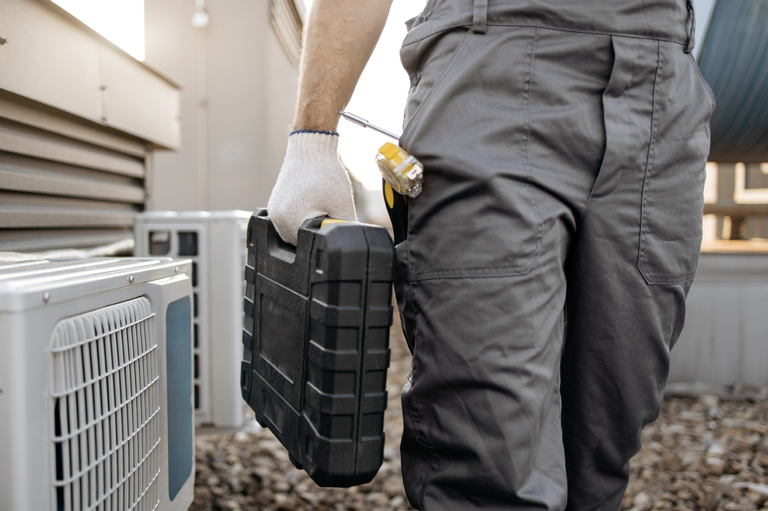
In this episode, Jimmy Smithell of New England Heat Pump Company explains why Mitsubishi heat pumps still need maintenance even though they do not burn fuel. He covers homeowner filter care, annual professional inspections and his team’s 23-point maintenance checklist. He also discusses service records, warranty considerations and how technicians assess systems that have gone years without maintenance.
John Maher: Hi, I’m John Maher. I’m here today with Jimmy Smithell of New England Heat Pump Company, a locally owned and family operated company with over 20 years of experience in the HVAC industry, specializing in Mitsubishi heat pumps and ductless heating and cooling systems. Today we’re talking about Mitsubishi heat pump maintenance. Welcome, Jimmy.
Jimmy Smithell: Hey, John. Thanks for having me.
Why Mitsubishi Heat Pumps Need Annual Maintenance
John: Absolutely. Jimmy, why do homeowners sometimes assume that Mitsubishi heat pumps require little or no maintenance and how can that assumption maybe be a problem?
Jimmy: Yeah, I would say the assumption is probably because we don’t burn fuel. These are very clean operating systems. We don’t have a fuel source, we don’t create soot, we don’t have carbon dioxide, these type of things. But I’m here to tell you that it’s very important that you do have a professional come out and maintain the systems, kind of like changing the oil in your car. You have to maintain these systems.
We recommend annual maintenance on all of our systems that we install. So on a preventative maintenance, we come out once a year. We look at things like Freon levels in the system, make sure that there’s no leaks in the system, check the condensate drains. We give it a full 23-point checklist is what we go through. It’s very important that we come out annually.
Homeowner Filter Cleaning and Routine Care
John: Are there any routine maintenance steps that homeowners can safely perform themselves?
Jimmy: Absolutely. So there’s indoor filters on these systems. It’s very important that we keep those filters clean. Behind those filters is half of the system, it’s called a coil or an A coil or an air handler. It looks like a radiator. So these little, little fins that are inside of it that expand and contract and produce heating and cooling, it’s very important that dust does not get through those filters and make it to that coil. So I would say it’s very important that the homeowners take good care of those filters. It really depends on the home.
If there’s a lot of pets and cat dander and things like that, I would tell you to check it once a month. If it’s dirty, then definitely keep up with it every few weeks. Typical homes, once every quarter is completely fine. But again, if there’s a lot of dander and dust in the home, you definitely want to check it the first month out, and take a look, and kind of go from there and get a good gauge of how it’s going to go.
John: Right. So if you do it after a month, you’ll kind of have a sense of how much dust and dirt it’s collecting and then you can go from there.
Jimmy: Yeah. Just look at what it’s collected.
John: And usually these filters are just a little plastic thing that you can just pull out and just run under the faucet in the sink, right, to clean them off? You don’t have to buy replacement filters and put them in or anything like that.
Jimmy: Yeah, correct. They’re very user-friendly. So the door opens up, the unit right behind me, that front door opens right up. There’s two little filters that say pull. You pull those out, you wash them under some warm water, and then there’s two little guides that that filter just slides right back into. There’s only one way they go in. You really can’t mess it up. There’s these little guides that kind of guide you to go back in. We just want to make sure that those filters are dry before we put them back in. So after you wash them, you want to definitely give them a good air dry and then let them probably sit out for a good hour just so they’re nice and dry.
Professional Heat Pump Service and the 23-Point Checklist
John: Talk again a little bit about some of the steps that you take when you come in and you do one of these annual visits, and what are the things that you’re working on cleaning and maintaining?
Jimmy: Yeah, the biggest thing that we’ll look at first thing is put a pair of gauges on the system. If it’s a system that we installed, on all of our installs we take digital photos. We save a digital folder for every customer. We take digital photos for every job that we do so we know exactly what your freon pressures and numbers should be. So that’s one thing that we hook up. Right away we look at those gauges, see if we’re right back at those same pressures, same temperatures, and go from there on that side of things. That’ll tell us if the system has a leak, etc. So that’s the first thing that we do.
The other big one is we take the outdoor unit cover off. That’s where your outdoor coil is. It looks just like the indoor, but it’s just a bigger version. It looks like a big radiator. A lot of pollen gets stuck into that system, so that’s one of the big things that we want to clean out. If it gets too clogged, it’s going to definitely result in performance issues for the system.
I recommend fall time for our preventative maintenance because it’s after our pollen season and right before our heating season. So it’s kind of best practice to do it right in that fall area is what we found is the best practice. Yeah, so we do a complete 23-point checklist on it and go through the whole system.
Maintenance Records, Performance and Warranty Coverage
John: What if you miss one of these maintenance systems, or I mean these maintenance times, and you’re maybe ignoring that, you’re letting filters get clogged up, you have dirty coils, the drains are getting clogged, maybe you have some refrigerant problems. How can those types of things affect the comfort in your home, the efficiency of the system itself, and maybe even your warranty coverage?
Jimmy: Yeah, so starting with the warranty coverage, we’re a diamond dealer for Mitsubishi, which means we’re that top tier. We can offer you a manufacturer’s 12-year warranty. We do have to keep a warranty log on that system. So it is recommended by the company that we come out once a year, any licensed contractor, not just us, come out once a year and have a record saved of that preventative maintenance. That way, if something were to happen, we can produce that maintenance report to them.
But as far as maintaining the system, it’s really highly recommended just for overall performance. If the homeowners don’t keep up with it, we see it a lot. We see a lot of… I just got a call the other day from a very nice gentleman, and we didn’t do the install, but he’s having a hard time finding somebody to maintain it because he said it’s been about five years, which it’s very often that we get that call where it’s three years or five years out for systems like that.
So it’s very important that we come out, especially after that much time, and get a good set of eyes on it and do our full checklist on it.
Servicing Heat Pumps After Years Without Maintenance
John: And in most cases, are you able to go ahead and clean that system up and get it running and then recommend regular maintenance after that?
Jimmy: Yeah, always. We do whatever it takes to get it right, in the right shape. What I will tell you, what we’ve seen in the past is some systems that have been installed incorrectly and then we go out and there’s mold inside of the units or something like that. That is not a maintenance thing. It’s very, very important to have these systems sized correctly by a professional. The number one thing I would tell you is to have these systems installed by a professional that [has a specialty with] these systems.
I mean when we look at a system like that, we have different recommendations, but if the system hasn’t been serviced in three, five, 10 years, we can clean it. It’s no worries there. If the system is sized correctly and in good operating order, we could definitely take the steps to make it right.
John: All right, well, that’s really great information, Jimmy. Thanks again for speaking with me today.
Jimmy: Yes. Thank you, John.
John: And for more information, you can visit the New England Heat Pump Company website at neheatpumpco.com or call 781-443-9911.