
Today, home heating in America looks much different than it did at the beginning of the century. In 2000, gas was the most used heating fuel in new residential construction, while electric heating, including heat pumps, represented a much smaller share of heating systems. But when you look at gas vs. heat pumps today, the gap has narrowed considerably.
Over the last 25 years, electric heating has edged out gas in new construction, while builders have chosen heat pumps for more new houses in the U.S. The number of heat pump shipments overall has also increased, which suggests that heat pumps are becoming more common for HVAC replacements and retrofits too. We crunch the numbers below.
Gas Heating Has Lost Ground Over the Last 25 Years
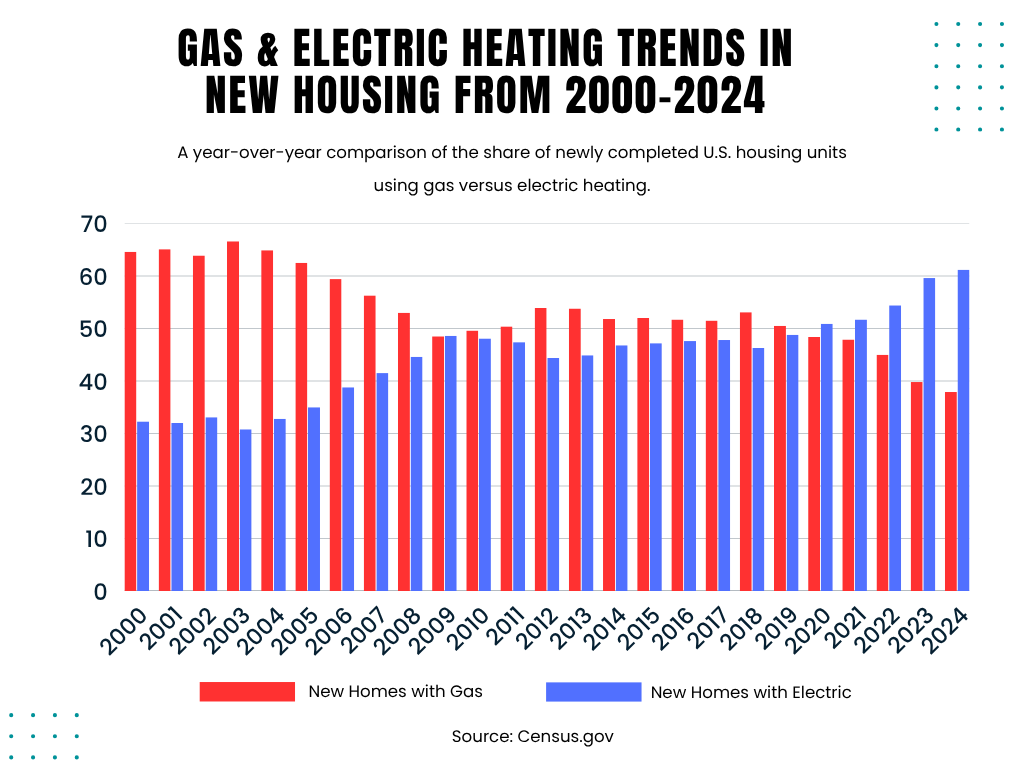
Gas once dominated new residential construction in America. Roughly 65% of newly completed housing units relied on gas for heat in 2000, but by 2024, that number fell to just 38%.
Now, 61% of new homes are built with electric heating systems, which include heat pumps. This is the highest number to date. Even though gas furnaces are still used widely throughout the country, the long-term trend illustrates how gas no longer dominates new construction HVAC systems the way it once did.
46% of HVAC Systems in New Homes Are Heat Pumps
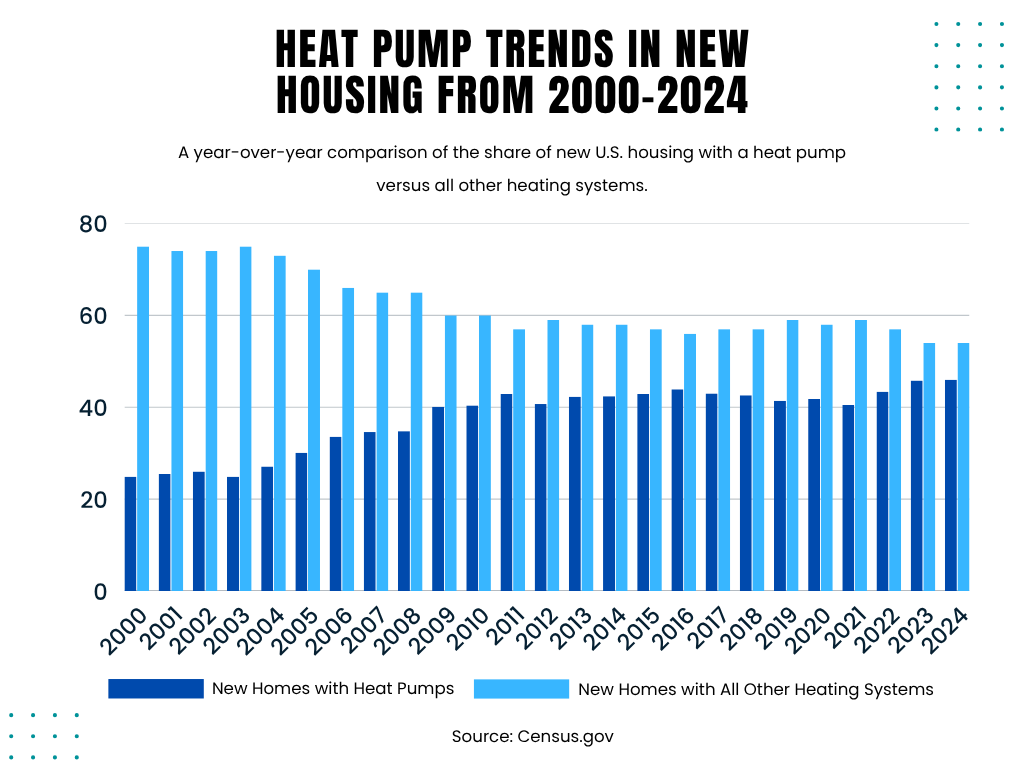
Over the last quarter-century, heat pumps have become one of the most common heating systems used in new residential construction. In 2000, only 25% of new homes were built with a heat pump, while 75% used all other types of heating systems. But in 2024, almost half of new homes have a heat pump. If this trend continues, heat pumps could eventually overtake all other heating systems combined in new residential construction.
Heat Pump Shipments Have Doubled Since 2010 and Are Now Outselling Fossil-Fuel Furnaces
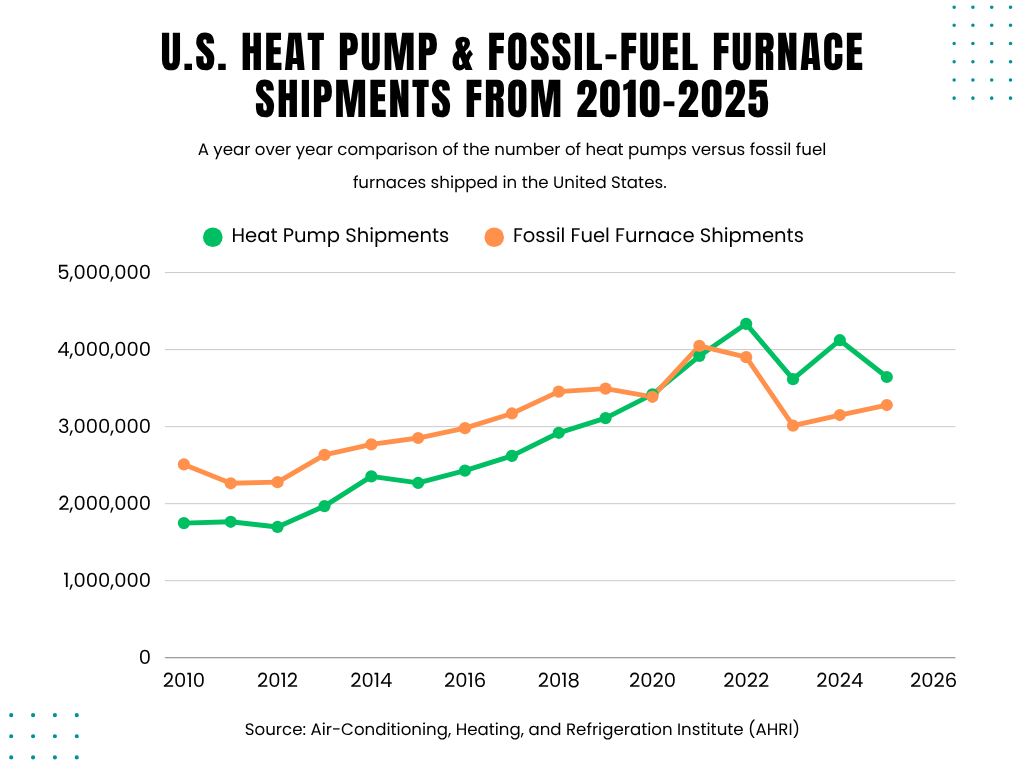
The growth in heat pumps goes beyond new construction. In 2010, U.S. manufacturers shipped approximately 1.75 million air-source heat pumps. By 2025, that number had risen to 3.64 million, meaning annual heat pump shipments have more than doubled over the last 15 years.
Fossil-fuel furnace shipments have grown much more slowly. Manufacturers shipped a little over 2.5 million gas and oil furnaces in 2010, compared to almost 3.3 million in 2025. Heat pumps started the period well behind furnaces, but by 2025, manufacturers were shipping hundreds of thousands more heat pumps each year.
Unlike new-construction figures, shipment data also includes systems that are being sold for existing homes. This includes heat pumps purchased to replace older HVAC systems or as part of retrofit projects, which provides a broader look at how the popularity of heat pumps has risen.
What’s Driving the Rise of Heat Pumps?
Now that we’ve demonstrated the differences between gas vs. heat pump installations, let’s take a look at the reasons why more builders and homeowners are choosing heat pump technology.
Heating and Cooling in One Unit
Heat pumps don’t just heat your house; they cool it too. These systems work as both a heater and an air conditioner, which means you don’t have to install and maintain two separate units.
Cleaner Air
Since heat pumps don’t use fossil fuels like gas furnaces or wood-burning stoves, homes with these systems have excellent indoor air quality. Many units also come with advanced filtration capabilities that further clean the air and reduce the circulation of harmful particulates and microbes.
Greater Energy Savings
Heat pumps use inverter-driven technology, which allows the system to adjust its output based on how much heating or cooling a home actually needs. Rather than constantly turning on and off at full power, the system can make smaller adjustments to keep indoor temperatures at the desired setting. This uses significantly less electricity compared to central air conditioners or electric furnaces, which translates to lower energy bills in both the summer and winter.
Excellent Cold Weather Performance
As technology has changed over the years, heat pumps have been designed to handle colder temperatures overall. For example, a Mitsubishi Hyper Heat H2i® system continues to provide dependable heating down to -13 degrees Fahrenheit. Newer Mitsubishi Hyper Heat H2i® Plus systems work well in even colder weather and continue to heat a home comfortably down to -22 degrees Fahrenheit.
Ductless Ability
Heat pumps can also be used without ducts to provide heating and cooling directly to a room. They can be mounted on the wall, the ceiling, or near the floor, which makes them a practical way to increase comfort without making major renovations. This works exceptionally well for retrofitting older homes or adding HVAC to a single room.
Zoning
Heat pumps also allow homeowners to create separate “zones” in their houses. Each zone can be set to its own temperature without affecting the temperature in other zones, giving you individual heating and cooling in every space.
What the Shift From Gas to Heat Pumps Means for Massachusetts Homeowners
As heat pumps become more common nationwide, Massachusetts homeowners have more options when it comes time to replace or upgrade their HVAC systems. Newer cold-climate technology has made heat pumps better suited for New England winters, while ductless systems provide an alternative for historic homes where adding or expanding ductwork may not make sense.
The numbers show that heat pumps are no longer a niche alternative to traditional heating and cooling equipment. With their growing share of new construction and rising shipment numbers, Massachusetts homeowners are increasingly likely to encounter heat pumps as one of their options the next time they replace, expand, or upgrade their HVAC system.
About New England Heat Pump Co.
New England Heat Pump Co. is an exclusive provider of Mitsubishi heat pump systems across the North Shore. With more than 20 years of experience, NEHPCO helps lead the way in heat pump adoption in Northeastern Massachusetts. Contact NEHPCO here.
Sources
U.S. Census Bureau
- Characteristics of New Housing
- Current Characteristics of New Housing Tables
- Heating Fuel in Completed Single-Family Homes
- Heating Fuel in Completed Multifamily Housing
- Heating Systems in Completed Single-Family Homes
- Heating Systems in Completed Multifamily Housing
- Historical Heating Fuel Data for Single-Family Homes
- Historical Heating Fuel Data for Multifamily Housing
- Historical Heating System Data for Single-Family Homes
- Historical Heat Pump Data for Multifamily Housing
- Characteristics of New Housing: Summary of Changes
Air-Conditioning, Heating, and Refrigeration Institute
- U.S. Heating and Cooling Equipment Shipment Statistics
- Historical Central Air Conditioner and Air-Source Heat Pump Shipment Data
- Monthly U.S. Heating and Cooling Equipment Shipments
- December 2025 U.S. Heating and Cooling Equipment Shipment Data
- Historical Furnace Shipment Data
