
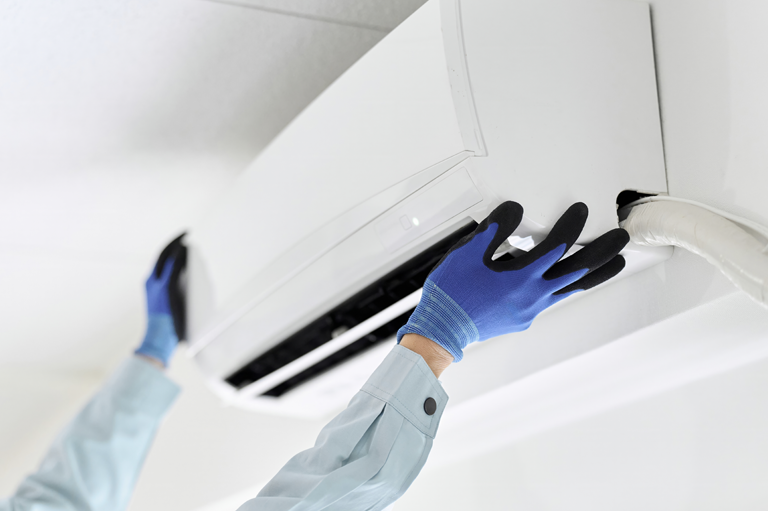
In this episode, Jimmy Smithell of New England Heat Pump Company examines common ductless installation problems, with a focus on oversized systems and improper equipment selection. He discusses short cycling, moisture issues and exposed line sets, along with how his team evaluates whether a system needs repairs or replacement. He also shares questions homeowners can ask when choosing a Mitsubishi heat pump contractor.
John Maher: Hi, I’m John Maher and I’m here today with Jimmy Smithell of New England Heat Pump Company, a locally owned and family operated company with over 20 years of experience in the HVAC industry, specializing in Mitsubishi heat pumps and ductless heating and cooling systems. Today we’re talking about Mitsubishi Ductless installation problems, what goes wrong and how experts fix them. Welcome, Jimmy.
Jimmy Smithell: Hey, John. Thank you for having me.
Oversized Heat Pumps: A Common Installation Mistake
John: Absolutely. Jimmy, what are some of the common installation mistakes that you see with ductless heat pump systems that are installed by other contractors?
Jimmy: Sizing. Sizing is, I’ll answer that right away. I see it daily, weekly. It’s sizing and sizing. Heat pumps are everything when it’s sized correctly. If it’s sized incorrectly, it’s a disaster. That’s the one thing that we really need to make sure that we’re doing correctly in this industry is sizing heat pumps correctly. I can’t tell you how many homes that I’ve been in the past month to do service work and the existing system is just grossly oversized and it causes all kinds of issues. We see it a lot.
Manual J Sizing, Short Cycling and Indoor Moisture
John: So tell me a little bit more about how poor equipment sizing can lead to things like uneven temperatures and excessive cycling and high electric bills, things like that.
Jimmy: Yeah, those are the exact problems right there. So when we look at a house, we figure out [what it will take] to heat and to cool the house. It’s called a Manual J. So that’s one piece. The next piece is selecting a piece of equipment to fit that. The outdoor equipment, you really have to look at the engineering side of it. This is a variable speed system.
So, we look at how much can the system turn down, right? So if the house needs 15,000 BTUs to cool it, but 40,000 BTUs to heat it, we’re selecting one piece to fit both of those loads, if that makes sense. We really need to make sure the equipment has the capability to turn down to that low cooling load and up to the high heat load when we need it. A lot of the times what we see is contractors sizing it just based on the number of rooms and not looking at the engineering charts and picking it to fit that.
So what that results in is an oversized system. So that’s going to do all the above that you just mentioned, short cycle, it’s going to cause moisture in the rooms, it’s going to cause very high electric bills. Short cycling is basically a unit that’s in a room that just turns on and turns off constantly. It’s just on, off, on, off, on, off. And what that results in for the room is high moisture. The compressor keeps turning on 100%, every time that that thing turns on. It’s wrong and we really need to make sure that these are sized correctly.
John: Right. So it’s cooling off the room, but it’s cooling it off too quickly and so it’s not able to draw the moisture out of the air.
Jimmy: Correct. We want to run a longer cycle than a shorter cycle with these systems, with any AC system because we want to pull moisture and humidity out of the air so it pulls air back into the return, conditions it, cleans it, puts it through filters and then back into the room. If it’s doing that in too quick of a process, you can’t get rid of the moisture out of the air. It’s just dumping it back into the room. Sizing is everything with heat pumps.
Condenser Placement and Line Set Protection
John: Do you sometimes see other problems like improperly installed line sets or drains, bad electrical wiring or refrigerant connections, things like that? And what do you do in those situations?
Jimmy: Yeah, we look at enough jobs where we see all the above. Just last week I looked at a job in the line sets. The contractor had this great idea to put this guy’s condenser on his little… He had a sunroom which had a different roof than the rest of his home and they put the star on the Christmas tree right on this guy’s roof. So that aside, the line sets, they just ran across the roof exposed to the sun and there was literally mold on the… More moss, but mold growing off of the line sets.
It’s really, really important to look at these systems as a whole and design them correctly for all of those reasons. Number one is aesthetics. Nobody wants a condenser on their roof. But number two is what we just talked about. The line sets really need to be in a case and routed professionally to protect them from sun, water, ice, all of that stuff. So it’s really important that you design them correctly.
Troubleshooting Ductless Systems: Repair or Replace?
John: How do you troubleshoot a poorly performing ductless system and how do you determine whether it just needs some correcting and some fixes or whether or not it might actually need to be partially or even completely replaced?
Jimmy: Yeah. So I will tell you my team, this is all we do is heat pumps. This is all we’ve specialized in for almost 20 years now and we’re very good at looking at these systems. If you have an existing system, I could tell you pulling up to the house if it’s oversized. So we look at the existing system and we’re realistic with the homeowners about it. We looked at a house the other day in Belmont and there was an existing system there and there’s just mold issues inside these indoor units. And unfortunately the only fix there was to replace the system. It’s not what the homeowner wanted to hear, but she heard the truth and that’s what we went ahead and did.
We felt like after spending countless hours for service and trying to clean the mold out of these things, at the end of the day, it’s just going to keep happening and nobody wants that in their house. There’s children in the house. At some point, yes, we do recommend just replacing the system. It really depends on what’s there. But again, we’ll be realistic about it with the homeowners when we look at it, but every situation’s different.
Choosing a Qualified Mitsubishi Heat Pump Contractor
John: What should homeowners look for when they’re choosing a Mitsubishi heat pump contractor so that maybe they’re less likely to encounter these types of problems?
Jimmy: Yeah, I would say look at reviews. That’s not everything because I’ll tell you there’s a lot of big brands out there that have thousands of reviews that I’ve quite honestly removed condensers out of houses recently because they’re grossly oversized and maybe it was just a sales guy that was out there. So not just reviews. I would say talk to other homeowners that have done business with them recently, see how their experience went, follow up, see if they’re a Mitsubishi diamond dealer, if they’ve been to factory training, are they sending out just salespeople, or have their comfort advisors actually been installers in the past, so what kind of history they have.
There’s all kinds of things that you can do to kind of interview a company, I would say. But gut feeling, I’m a big gut feeling type guy. I read the room pretty well, but I would say read the room and if you’ve got a bad gut feeling about a contractor in your home, then get another quote. It’s not going to hurt you to get multiple quotes and go with your gut. If all the other things check out, of course.
John: All right, well, that’s really great information, Jimmy. Thanks again for speaking with me today.
Jimmy: Sure. Thank you, John.
John: And for more information, you can visit the New England Heat Pump Company website at neheatpumpco.com or call 781-443-9911.