
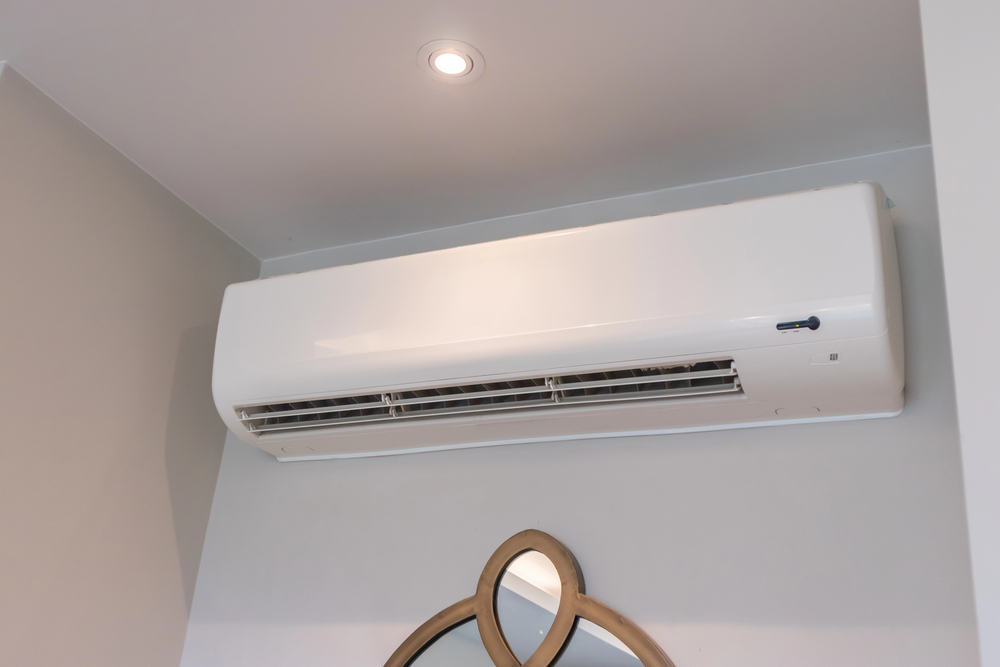
If you’re looking into converting your basement into a livable space, there are several things to consider. Beyond deciding whether you want carpet or tile, it’s also important to think about heating and cooling. Plus, humidity control is key for underground spaces. We take a detailed look at ductless for basements below and how this type of HVAC is particularly well suited to basement conversions.
Why Basements Are So Hard to Keep Comfortable
Basements are cool but damp
While basements are automatically cooler because of their underground location, this makes them prone to water leakage and the damp, dank feeling that basements are known for. As a result, humidity and mold are major concerns.
There’s usually not enough airflow
In addition to being damp, basements with no existing ductwork lack ventilation and airflow. Not only does this compound the above issues, but it also limits your HVAC options.
It stays a different temperature than upper floors
Heat rises, which can leave lower levels under-conditioned in the summer and too cold in the winter. Traditional HVAC systems often struggle to push enough conditioned air down to the basement and can make this problem worse.
Ductless for Basements Is an Ideal Solution
Ductless mini-split systems are one of the most effective ways to make a basement comfortable year-round without major renovations. Here’s why:
No need for ductwork
Installing ductwork for a central HVAC unit in a basement can be expensive and time consuming. Furthermore, it takes up extra space that you could be using for something else. Ductless HVAC requires no ducts, which eliminates this issue entirely.
Creates an independent temperature zone
With a ductless system, your basement operates on its own thermostat. That means you can keep it warmer, cooler, or drier than the rest of your home without affecting upstairs comfort.
Uses less electricity
Because ductless systems don’t lose energy through ductwork, they are more energy-efficient than central units. They also use inverter technology to adjust output based on demand, which helps helping reduce energy waste and lower monthly utility bills.
Offers quiet operation
Space heaters, window ACs, and even central HVAC systems can be incredibly noisy. If your basement conversion is being used for bedrooms, a media room, or an office, this noise is disruptive. Ductless mini-splits are the quietest system currently on the market, so they’re ideal for basement conversions where noise needs to be controlled.
How to Size a Basement Ductless Unit
The size of your basement ductless system plays a significant role in how well it can heat and cool the space. It also has a bearing on your energy expenses and the life of your unit. A system that is too large will cycle on and off repeatedly, while a system that is too small will fail to heat or cool the entire space. Here’s how to size a basement ductless unit:
A proper load calculation is the most accurate way to determine the right system size. This is done by an HVAC professional and takes into account your basement’s square footage, ceiling height, insulation levels, window size, air leakage, and even local climate conditions.
Other Installation Considerations
Unit placement
The indoor unit needs to be put somewhere where air can circulate freely across the entire basement. Meanwhile, the outdoor condenser should be installed in a location with proper clearance and protection from the elements without compromising the space needed for maintenance access.
Electrical requirements
Most ductless systems require a dedicated electrical circuit. Depending on your current setup, this may involve upgrading your electrical panel or running new wiring to support the system.
Condensation drainage
As ductless systems remove moisture from the air, they produce condensation that needs to be drained. Usually, a gravity-fed drain line or a condensate pump can be used to prevent water buildup and potential damage.
What to Do Before Installing Ductless In Your Basement
Before installing any HVAC system, you should do your best to address existing moisture issues. Sealing cracks, installing vapor barriers, and making sure there’s proper drainage around your foundation can prevent long-term humidity and mold problems.
Proper insulation helps maintain consistent temperatures and improves the efficiency of your ductless system. Insulating walls and rim joists can significantly reduce heat loss and make your basement more comfortable year-round.
How New England Heat Pump Co. Can Help
At New England Heat Pump Co., we specialize in designing and installing ductless systems for challenging spaces like basements. Contact us today to schedule a consultation and get started by calling (781) 443-9911.