
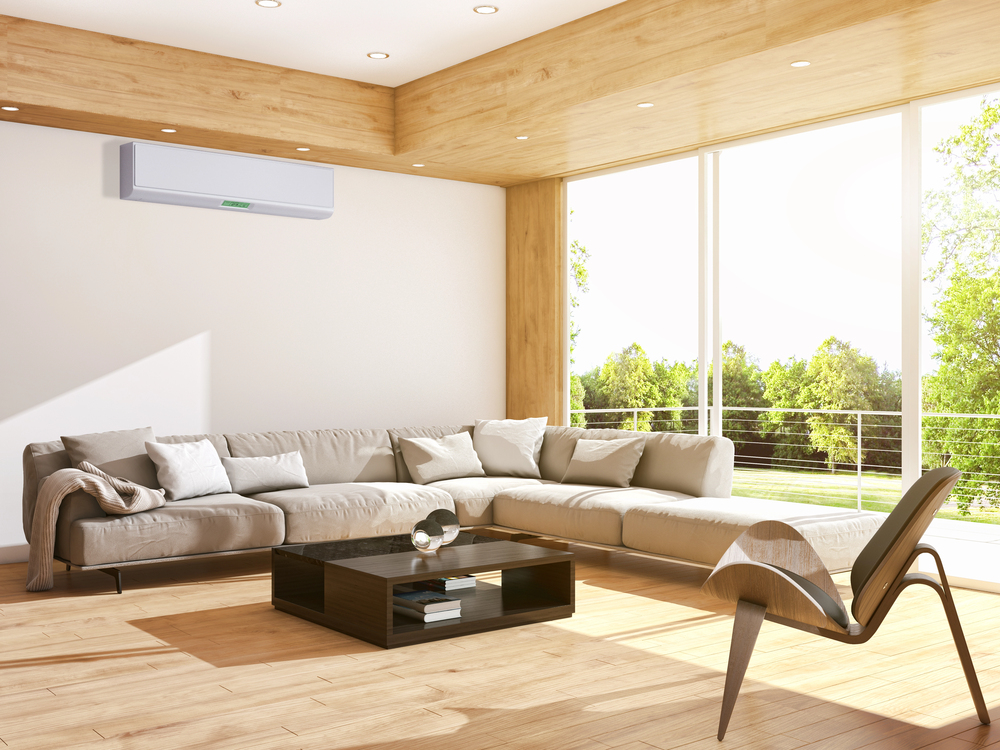
If you have a sunroom or are planning to build one, one of the most important things to consider is how you will heat and cool the space. These rooms can vary widely in temperature throughout the seasons, so making your space usable all year depends on how comfortable you can keep it. We go over ductless for sunrooms below and how it works to maintain consistent temps in rooms with lots of windows.
Why Sunrooms Are So Hard to Keep Comfortable
They’re exposed to the outdoors
Sunrooms are designed to let in as much natural light as possible, but that also means they can trap heat or let in cold drafts through the windows. Even on mild days, a sunroom can feel significantly warmer or cooler than the rest of your home.
They don’t have good insulation
Sunrooms have multiple windows, which usually means there’s not a lot of insulation unless you have high-quality, double-pane ones. In the winter, this causes rapid heat loss, while summer results in solar heat gain. Either way, it can be a struggle to keep the room’s temp steady.
They might not connect to your central HVAC system
Many sunrooms are additions built after the main home and aren’t tied into the existing ductwork. Even if they are, your HVAC system may not be designed to handle the extra load.
Ductless for Sunrooms Is an Ideal Solution
Ductless mini-split systems are one of the easiest ways to make a sunroom comfortable all year without major renovations. Here’s why:
Heating and cooling in one system
Ductless systems remove heat from your sunroom in the summer and pump it in during the winter. This offers both heating and cooling in one unit without the need for a separate heater and AC.
No loss of window space
Window ACs take up your beautiful window space and can be unsightly. While this is bad enough in your living room or a bedroom, it really takes away from the purpose and design of a sunroom.
Independent thermostat control
Ductless also gives your sunroom its own temperature zone, so you can adjust it without affecting any of your other rooms. Want it cooler during the summer? Turn the AC up, and rest assured your bedroom won’t become a refrigerator. Need it warmer in winter? Crank the heat without turning your living room into a furnace.
Inverter technology adapts to changing conditions
Sunrooms experience constant temperature shifts throughout the day. Ductless systems use inverter-driven compressors that adjust output in real time, maintaining a consistent temperature without constantly turning on and off.
How to Size a Sunroom Ductless System
Sizing is especially important for sunrooms because of the high amount of glass and sun exposure. A system that’s too small won’t keep up with heat gain, while an oversized system can short cycle and reduce efficiency.
The best way to size a ductless system is through a professional load calculation. This takes into account factors like square footage, ceiling height, window size and direction, insulation quality, and how much direct sunlight the room receives. Sunrooms often require more cooling capacity than standard rooms of the same size, so working with an expert is key.
How to Manage Solar Heat Gain
Even with a ductless system, managing how much heat enters your sunroom can significantly improve comfort and efficiency.
Adding window treatments like blinds, shades, or thermal curtains can help block direct sunlight during the hottest parts of the day. Window tinting or low-emissivity (low-E) coatings can also reduce heat transfer while still allowing natural light in.
How New England Heat Pump Co. Can Help
At New England Heat Pump Co., our specialty is Mitsubishi ductless. We don’t do anything else for a reason. Contact us today to schedule a consultation and get started by calling (781) 443-9911.