
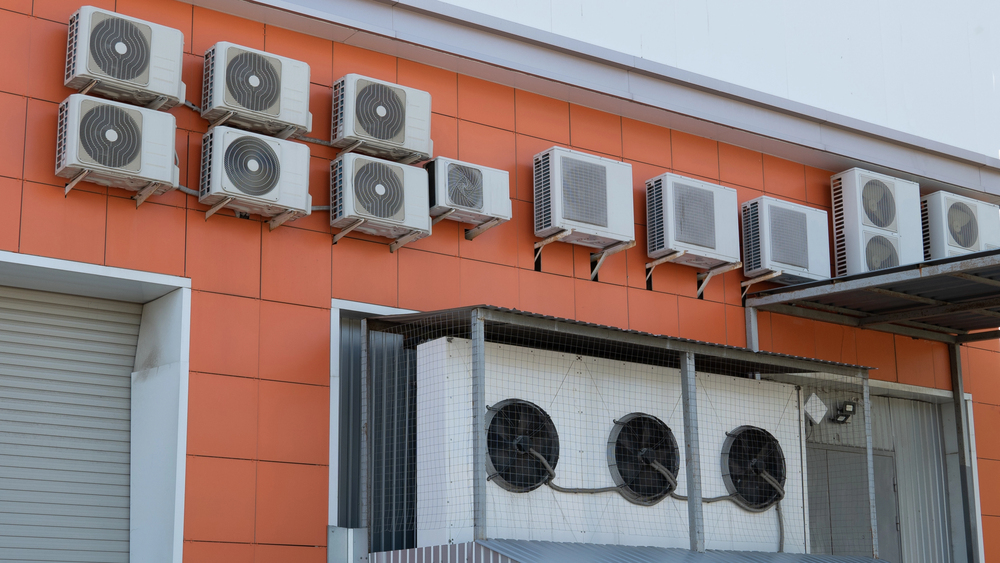
HVAC expert James Smithell explains why restaurants and retail spaces are challenging to heat and cool due to fluctuating occupancy, constantly opening doors, and hot kitchen areas. He discusses how variable-speed heat pumps and carefully designed zoning systems help balance temperatures between kitchens, dining rooms, and other areas. Smithell also explains why separate systems may be needed to run cooling in one zone while heating another. The conversation covers common HVAC design mistakes, equipment placement in greasy kitchen environments, and ways businesses can minimize disruption during installations. He also recommends planning upgrades carefully and maintaining systems regularly to extend equipment lifespan.
John Maher: Hi, I am John Maher. I’m here today with James Smithell of the New England Heat Pump Company, a locally owned and family operated company with over 20 years of experience in the HVAC industry, specializing in Mitsubishi heat pumps and ductless heating and cooling systems. Today we’re talking about commercial heat pumps for restaurants and other retail spaces. Welcome, Jimmy.
Jimmy Smithell: Hey, John. Thanks for having me on today.
Why are Restaurants and Retail Spaces Difficult for Climate Control?
John: Sure. Jimmy, what makes restaurants and other retail spaces uniquely hard for comfort?
Jimmy: Yeah, so a couple of things, right? I would say doors, right? Doors are always opening and closing, whether it’s in the summer or winter, we have that huge load that comes into that space repeatedly, so we really have to deal with that. A lot of times that’s on the front side or entranceway of the building. Occupancy, so some restaurants will have at some time a lot of people in the establishment. Other times not so much, uneven zoning requirements. There’s a lot.
John: There’s a lot of changes from day to day. You might be really busy on the weekends and not so much during the week, and you might be busy for dinner, but not as much for lunch or something like that. So yeah, lots of changes that happen. And then of course you have the different seasons where you’re cooling and the summer, and like you said, in the winter, every time somebody opens that door, it lets in a blast of cold air. So, those are some of the issues that you have to deal with.
How to Deal with These Environments
Jimmy: Correct. And selecting the right equipment for that where it’s variable speed, so it could accommodate that, right? Where it could turn up and turn down and kind of what we call almost size itself to the space or to the load. It’s so important in a situation like that versus just having a, let’s just say an old fossil system that’s like a light switch. It’s either all the way on or all the way off. The equipment selection there is very, very important.
Designing Zoning in Restaurants and Retail Space
John: In restaurants in particular, sometimes they deal with issues where you have a hot kitchen and a cold dining room, so obviously there’s ovens and things like that in the kitchen. The kitchen is boiling hot, so then maybe the heating system shuts off because of that, but then you end up with your dining room being freezing cold. How do you design zoning in a restaurant type of space so that it makes both areas comfortable?
Jimmy: Yeah, this is an interesting one. We actually just did a big restaurant and we did a lot of work on the backside of figuring out what was right for this place because you just hit it right on the head. The kitchen versus the dining room is totally different. So, you can’t just do a regular manual J on that property because of those reasons. Ovens, this restaurant, it was a big restaurant. They had ovens that were just creating so much BTU load in this kitchen. And on top of that, they had these ventilation hoods that were removing so much air and obviously heat gets removed with that air. Now we’re looking at summertime of cooling that same space with those same problems. The simple answer is really think about the systems that you’re designing. In this situation, for us it was designing a couple of different systems.
So, the kitchen was its own system with its own thermostat, variable speed. So it could really fit and size itself to that space. On any given day, if the ovens are on and we have a huge load, it’s going to ramp up, it’s going to call for a lot of heat, and then let’s say ovens go off, employees are still in there, it’s going to turn itself down. It’s really going to accommodate the space based on the thermostat of what’s going on in that room.
And same thing for the dining room, right at this restaurant, this facility, we were able to do a mix of ducted and ductless and give them the best of both worlds. We gave them the exact zoning control room for room in the dining rooms, the upstairs bar, we did a nice ducted system up there. It’s going to be different from establishment to establishment, but for that situation, it was selecting multiple systems with multiple different zones and we were able to achieve the perfect balance for that commercial building.
Can You Run Air Conditioning in One Zone and Heating in Another?
John: Could you actually have a situation where you need to have air conditioning running in the kitchen at the same time that you have heating running in the dining room?
Jimmy: Absolutely. That’s definitely going to be the case here. And we’re able to do that with the way that we design the system because the way that heat pumps work is you can’t run heating and cooling at the same time out of the same system because it has to reverse cycle. It has to reverse how it’s doing things.
So, that was one of the things that we looked at when we designed this system where, yep, I could do cooling in the kitchen. It’s a million degrees in there because I got all these ovens and load, but the dining room, it’s five degrees out. We got to get some heat out here. So again, we were able to give the perfect system with a mix of ducted and ductless and different compressors, and we actually go to that restaurant all the time, me and my family for dinner. So I can vouch that it’s nice and toasty in there.
Common Mistakes with Commercial HVAC
John: What are some of the common mistakes that you see in commercial HVAC layouts that maybe cause uneven temperatures and complaints?
Jimmy: Yeah, I think we really just touched on that it’s really accommodating for what’s going to be in there, right? Not just going off the manual J, but using common sense rule too, where if we’re in a kitchen and we know we got all this makeup air coming in, we’ve got these huge exhaust running, we really have to say, okay, let’s think about this. Right? My manual J doesn’t know the difference of that. It told me I needed 50,000 of heat. Let’s do the math here. What are these ovens creating for BTUs? Right? Let’s do the math here and figure this out.
So, I would say a lot of contractors get themselves in trouble with just that. On top of that is going to be really selecting the right equipment for the space. And just like any space, you really have to select the right equipment. I don’t see any better way of doing it than selecting multiple standalone systems. You could do everything you needed to do out of this system and have this system completely operate reverse or total opposite of whatever that other system’s doing. So, I would say multiple systems if you can. If not, definitely multiple zones and just definitely size for loads that are not on the manual J that are in the room.
Addressing Specific Challenges in Commercial Kitchens.
John: In a restaurant in particular. Do things like the grease and extra humidity from the cooking. And you mentioned ventilation hoods over the ovens and things like that. Do those types of things affect the equipment choice and in particular, maintenance of the units moving forward?
Jimmy: A hundred percent. Kitchens are greasy. They’re dirty. We all know it. We’ve all been in there or seen commercial kitchens. They’re greasy, they’re dirty. It’s a beast to deal with any HVAC system. Placement is going to be huge on that. Wherever you place that system, just think about that. Think about where the grease is being produced. There’s a lot of electronics in these systems, a lot of boards controls. We just don’t want that stuff getting caked with grease or humidity or moisture. Really think about where this stuff’s going to be placed. The intake, so the exhaust side where it pulls the room air in, again, think about that. Maybe think about putting its own filtration a second filter on the intake. We call it an intake grill where you have a kind of second line of protection for that system, but it’s a beast to deal with. Yeah, I would say it’s a beast to deal with that grease in any kitchen.
Minimizing Downtime During an HVAC Install
John: In a small business, any downtime could really affect the bottom line. What’s the best way to minimize the downtime during an installation of a system like this, and what should a restaurant or retail space budget for ongoing service?
Jimmy: Yeah, I would say we’ve done overnights where we come in after their close or after hours and done our thing. If it’s very involved, I would say plan it maybe in stages. Maybe we can close this portion of the building for two days and have you still operate over here and then we switch and you guys operate here while we work over here, we can work together and get the job done. But I would say if it can be after hours, that’s ideal because we’re not going to disrupt any business. Sometimes the job’s too big for just one overnight and we have to do it in stages, but all that stuff is talked about at the table. We don’t just surprise, surprise, we have to close your business. It’s really all planned in coordinated throughout that process.
What to Do Before Replacing HVAC Equipment?
John: And are there any quick wins that you recommend before replacing equipment? What should a restaurant maybe do before the installation to kind of prepare for it or to change what it is that you need to install?
Jimmy: Yeah, I would say service is key, right? Longevity. If you have your system serviced, it’s going to last a longer lifespan. But I would just tell business owners just to right plan for that. We’re going to have to get in there to replace equipment eventually. It’s not lifetime stuff. Just keep it in mind, whether it’s during a holiday week or week, overnight. Just keep it in mind that we’ll definitely have to get in there at some point and we’ll work with you, but you have to work with us, right? We’re going to to either close a portion down or maybe work overnight. There will be a little bit of disruption there.
Installing Vestibule In The Entrance?
John: Do you recommend that this might now be the time to think about things like installing a little vestibule in the entrance area to not have that blast of cold air coming in every time somebody opens the door like you talked about earlier, is now a good time to address some of those issues and does that change how you would approach installing a system?
Jimmy: Yeah, a couple of things that could improve, right? It’s going to improve the other system not turning on so much. So you’re going to get a little bit longer out of it. And also you’re going to have secondary heat in the space. If we do have to shut the other system down to replace it, we have some type of other heat to maintain or cooling or whatever it may be. But yeah, that would be a great idea. I agree with that.
John: Alright, well that’s really great information Jimmy. Thanks again for speaking with me today.
Jimmy: Thank you, John. Take care.
John: And for more information, you can visit the New England Heat Pump Company website at neheatpumpco.com.